Structural Steel Angles: Properties, Types, and Applications
Introduction
Structural steel angles are among the most commonly used rolled steel products in construction and engineering. Their unique L-shaped profile provides excellent strength, stability, and versatility, making them a fundamental choice in frameworks, reinforcements, and industrial projects. From skyscrapers and bridges to machinery and everyday infrastructure, steel angles play a pivotal role in ensuring that structures are safe, durable, and economical.
In this article, we’ll explore the properties, manufacturing process, classifications, applications, and advantages of structural steel angles, while also looking at their relevance in sustainable and modern construction practices.
What Are Structural Steel Angles?
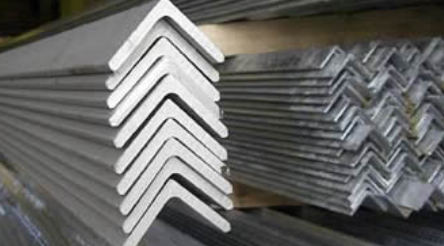
A structural steel angle is a long piece of steel rolled into a 90° angle with two legs, forming the shape of the letter “L.” Depending on the requirement, these legs can be of equal length or unequal length, and the thickness varies according to strength needs.
Key Characteristics:
- Shape: “L” profile with one right angle.
- Standardization: Produced in set dimensions, usually following ASTM, EN, or IS standards.
- Flexibility: Can be cut, drilled, bolted, or welded easily.
- Strength: Provides rigidity and resistance against bending and shear forces.
Manufacturing Process of Steel Angles
The production of structural steel angles involves several stages:
- Melting & Casting
- Iron ore, scrap, and alloys are melted in a furnace.
- The molten steel is cast into billets.
- Hot Rolling
- Billets are reheated and passed through rolling mills at high temperatures.
- The material is shaped into the “L” profile.
- Cooling
- Angles are cooled in controlled conditions to relieve stress and increase durability.
- Finishing
- Edges are trimmed, and angles may be straightened or surface treated.
- Quality Testing
- Mechanical and dimensional checks ensure compliance with structural standards.
Types of Structural Steel Angles
1. Equal Angles
- Both legs are the same length.
- Provide uniform strength on both axes.
- Widely used in general construction and load-bearing frameworks.
2. Unequal Angles
- One leg is longer than the other.
- Useful in applications where asymmetrical support is needed.
- Commonly seen in bracing, shipbuilding, and structural reinforcements.
3. Galvanized Steel Angles
- Coated with zinc to prevent corrosion.
- Essential for outdoor and marine environments.
4. Hot-Rolled vs. Cold-Formed Angles
- Hot-Rolled Angles: Produced at high temperatures, offering toughness and flexibility.
- Cold-Formed Angles: Shaped at room temperature, ensuring dimensional accuracy.
Standard Sizes and Dimensions
Structural steel angles come in standardized dimensions to fit various applications. They are typically measured by:
- Leg length (e.g., 50 mm × 50 mm or 100 mm × 75 mm).
- Thickness (ranging from 3 mm to 20 mm or more).
- Length (commonly supplied in 6 m, 9 m, or 12 m lengths).
Different countries follow specific standards such as ASTM (American), EN (European), IS (Indian), ensuring uniformity across industries.
Applications of Structural Steel Angles
Structural steel angles are versatile and find use in a wide range of industries:
- Construction Industry
- Framework for buildings, bridges, and towers.
- Roof trusses and bracing systems.
- Reinforcement in concrete structures.
- Industrial Manufacturing
- Machinery frames and support structures.
- Conveyor systems and racks.
- Platforms and walkways.
- Transportation & Shipbuilding
- Rail track supports.
- Hull reinforcements in ships.
- Truck chassis and trailers.
- Energy & Utilities
- Transmission towers and substations.
- Oil and gas platforms.
- Renewable energy structures like wind turbine bases.
- Everyday Infrastructure
- Stairs, guardrails, and fencing.
- Storage systems.
- Agricultural equipment.
Advantages of Structural Steel Angles
- High Strength-to-Weight Ratio: Strong without being excessively heavy.
- Cost-Effective: Affordable compared to many other materials.
- Versatile: Can be used alone or in combination with other steel sections.
- Ease of Fabrication: Simple to cut, weld, and assemble.
- Corrosion Resistance: Enhanced when galvanized or surface-treated.
- Sustainability: Steel is recyclable, supporting eco-friendly construction.
Structural Steel Angles in Modern Construction
With the growth of urbanization and infrastructure development, structural steel angles have become indispensable. Their adaptability allows architects and engineers to design more efficient and sustainable projects. Advances in steel coatings, fabrication techniques, and design software have further expanded their role in modern construction.
Sustainability and Recycling
Steel is one of the most recyclable materials in the world. Structural steel angles, after serving their purpose, can be melted down and reused without losing strength. This reduces waste, lowers environmental impact, and supports sustainable construction practices.
Conclusion
Structural steel angles may appear simple, but they are a cornerstone of construction and engineering. Their durability, adaptability, and cost-effectiveness make them essential for frameworks, reinforcements, and industrial projects worldwide. As infrastructure demands grow and sustainability becomes more critical, the importance of steel angles will only continue to rise.
Whether in the skeleton of a skyscraper, the frame of a bridge, or the structure of everyday machinery, structural steel angles remain indispensable elements of strength and stability.