How to explain the success of Dragon Ball?
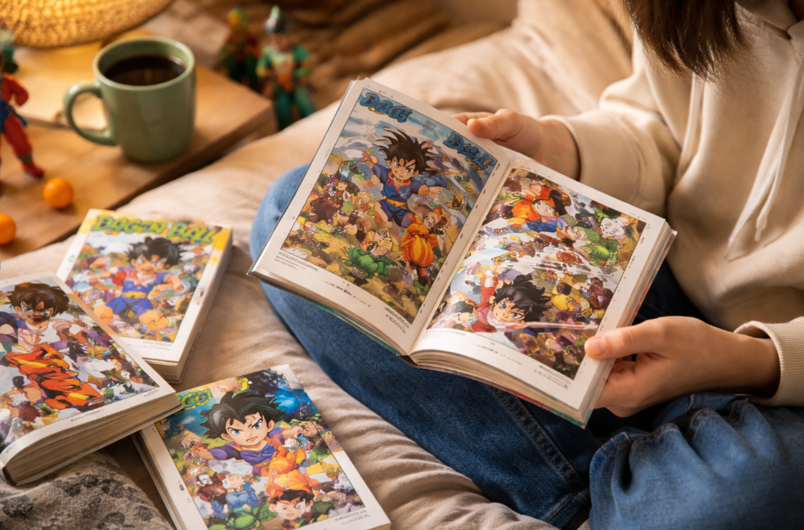
How does a simple tale of a monkey-tailed boy with a pure heart grow into a global pop culture colossus? Like a Kamehameha wave building from stillness to explosion, Dragon Ball began with modest pages in Weekly Shōnen Jump before spiralling into a cultural supernova. More than just a manga, it’s become a worldwide emblem of power, friendship and endless transformation. People around the globe still debate power levels, mimic fusion dances, and hunt for the perfect Dragon Ball figures. But what really explains this enduring success? It’s not just nostalgia or flashy battles. There’s a deeper formula, a narrative alchemy that transcends borders and generations. Let’s dive into the real reasons behind the triumph of Dragon Ball, where every page packs a punch and every transformation reflects the spirit of its readers.
The origin story: where passion meets publication
Akira Toriyama’s creative DNA is woven into every fibre of Dragon Ball. Inspired by Journey to the West and martial arts films, his vision materialised into a world where humour, fantasy and combat coexist in harmony. Goku, the main character, starts his journey as an innocent and strong boy in the wilderness, unknowingly carrying a destiny that would captivate millions. But the foundation of Dragon Ball’s success lies in its structured storytelling, combining episodic adventures with an overarching plot. Readers were pulled in not only by battles but also by a sense of growth and personal evolution, mirrored in Goku’s journey from naive child to intergalactic saviour.
From the start, it avoided being a typical fighting manga. It layered comic relief, emotional depth and moral questions. This multifaceted nature of the story gave it a wide audience appeal. Kids loved the action. Adults connected with its lessons. And as the franchise grew, so did its universe. Dragon Ball Z introduced layered villains, power scaling and high-stakes arcs that elevated its appeal. The narrative began to reflect philosophical questions the burden of power, the drive for improvement, the essence of heroism.
Toriyama didn’t just build characters. He built icons. The series also had impeccable timing. In the 1980s, Japan was booming economically, and manga was more accessible than ever. Dragon Ball’s weekly serialization kept fans hooked, while anime adaptation ensured the visuals stayed alive in memory.
That’s also when merchandise entered the picture. From the earliest action figures to elaborate anime posters, the world of Dragon Ball expanded far beyond the printed page. This origin laid the foundation. But the true secret lies in what came after…
Characters that evolve with their audience
Ask any fan: what keeps you coming back to Dragon Ball? The answer often circles back to the characters. Not just because they’re powerful, but because they evolve. Goku, Vegeta, Piccolo, even Krillin they all grow in ways that reflect our own human journeys. Character development in Dragon Ball is more than just new hairstyles and glowing auras. Goku learns humility. Vegeta wrestles with pride and redemption. Gohan embodies the weight of expectations. These are deeply human arcs, camouflaged within otherworldly battles.
What resonates is this: characters fail. And they fail publicly. Goku dies. Gohan loses control. Trunks can’t save his future. But each failure becomes a stepping stone. This mirrors our own struggles, creating an emotional bond between viewer and character. Toriyama also manages to balance the cast. Supporting characters aren’t just background noise. They’re essential players. Piccolo’s transformation from enemy to mentor is one of the most profound arcs in shōnen history. Even comedic characters like Master Roshi serve purpose beyond laughs.
Layers of relationships
Characters don’t just grow independently their relationships evolve. The rivalry between Goku and Vegeta isn’t static. It matures. It teaches respect. It reflects how competition, when rooted in admiration, fuels personal growth.
Family, legacy and passing the torch
Dragon Ball also places importance on lineage. Gohan, Goten, Trunks they represent generational progression. Fans who grew up with Goku now watch his children take the stage, forming a legacy that passes from one age group to another. This interconnectedness deepens the emotional stakes. When fans cheer for a character, they’re cheering for their own memories and growth as well.
See also: 7 Ways to Style SSSTEIN Clothing for Every Season
Iconic transformations and unforgettable battles
When Goku first turned Super Saiyan, the world changed. The scene wasn’t just about power it was about pain, loss, and transcendence. That moment crystallised everything Dragon Ball stood for: surpassing limits, even in despair. Dragon Ball’s battles are meticulously choreographed emotional arcs. Each punch carries purpose. Each blast reveals inner turmoil. The fights are not just physical they’re psychological.
Why is Dragon Ball so popular? Because it ties transformation to storytelling. The Super Saiyan isn’t just a power-up. It’s a metaphor for emotional breakthrough, for pushing past what life says you can endure. The anime also contributed to making fights feel epic. Dynamic angles, slow-motion, scream-powered animations these techniques became staples of modern anime. Shows like Naruto, Bleach, and My Hero Academia all borrow from Dragon Ball’s visual language. Here’s what Dragon Ball brought to the table:
- power scaling that redefined the genre
- transformations tied to emotion
- rivals that drive each other forward
- tension that builds over multiple episodes
- signature attacks that became household terms
These elements created ritual. Fans didn’t just watch they anticipated, analysed, and rewatched. Every battle felt like a grand event, an emotional rollercoaster masked as action. And yet, despite the epic nature, it never lost its human core. Goku fights for his friends. Vegeta fights for his pride. Gohan fights for peace. The arena may be alien planets. The stakes may be universes. But the reason to fight is always something deeply human.
Globalisation and cultural legacy
The spread of Dragon Ball across the world isn’t just due to good dubbing or catchy theme songs. It tapped into universal themes perseverance, identity, friendship that transcend language. In Europe, Latin America, the Middle East and Africa, Dragon Ball aired during prime after-school hours. It created a shared culture, a mythology for millennials. Its dialogues became catchphrases. Its gestures became memes. Its characters became idols.
The merchandising boom also solidified this legacy. Dragon Ball was among the first anime to monetise successfully on a massive global scale. From schoolbags to capsule toys, it planted itself in daily life. More than 30 years later, the franchise keeps reinventing itself Dragon Ball Super, video games, movies, spin-offs. Yet it never forgets its roots: heart-pounding adventure and emotional growth.
A story that never stops evolving
Dragon Ball’s secret is its adaptability. Each new era brings new fans. New villains. New meanings. Yet the spirit remains unchanged. It speaks to anyone who has ever tried to better themselves, who has fallen and risen, who values loyalty over ego. That’s why Dragon Ball remains relevant. Because its heart beats with timeless truths.
The journey continues
Dragon Ball is not just a manga or an anime it’s a mirror. A mirror of human resilience, emotional depth and transformation. Its universe expands, yet never loses touch with what matters: connection, growth and meaning. Whether you’ve been a fan since the ’80s or just discovered it, the journey never ends. What does Dragon Ball mean to you?