Can Ancient Agricultural Practices Hold the Key to Solving Modern Food Security Challenges?
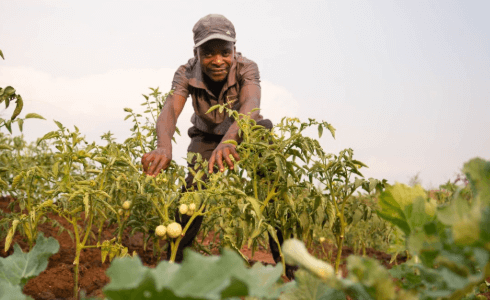
As global populations grow and climate change accelerates, modern agriculture is under immense pressure. Soil erosion, water scarcity, and declining crop diversity are threatening food systems across continents. Ironically, while technology races forward to find solutions, some of the most sustainable answers may already exist—rooted in centuries-old farming traditions.
Around the world, indigenous and ancient agricultural techniques are proving that “low-tech” doesn’t mean ineffective. These practices were designed with ecological balance in mind, often yielding long-term benefits that modern methods overlook.
Ancient Wisdom Meets Modern Problems
Traditional farming techniques were born from necessity. In places where land, water, or resources were limited, farmers learned to adapt their environments instead of trying to dominate them. From Asia’s terraced hillsides to Africa’s intercropping systems and South America’s raised fields, these methods prioritized harmony between people and nature.
Modern industrial farming, by contrast, focuses on maximizing short-term yield—often at the expense of soil health and ecological stability. But as extreme weather patterns increase and soil fertility declines, the world is realizing that traditional systems might hold the secret to agricultural resilience.
Lessons from the Land: How Ancient Practices Sustain Life
Some of the oldest and most successful examples of sustainable farming exist in rugged landscapes once considered inhospitable. Farmers in mountainous regions of Southeast Asia and the Andes have cultivated crops on steep slopes for centuries using a practice known as what is terrace farming.
By cutting the land into step-like formations, these communities reduced soil erosion, improved water retention, and created microclimates ideal for growing rice, potatoes, and grains. This ingenious design allowed food production to thrive where flat farmland was nonexistent.
Similarly, ancient irrigation systems in Persia (the qanats), crop rotation in medieval Europe, and the “Three Sisters” interplanting system of Native American farmers all show a deep understanding of ecological balance—knowledge gained from observation rather than machinery.
The Climate Connection
Ancient farming wasn’t just sustainable—it was inherently climate-smart. These methods evolved in response to local ecosystems, making them naturally adaptive to weather shifts.
Today, that adaptability is invaluable. As rainfall becomes unpredictable and desertification spreads, traditional techniques are being reintroduced in areas facing crisis. Terraced farming, for example, has helped communities in East Africa and Nepal reclaim eroded land. Meanwhile, indigenous water-harvesting systems are helping drought-prone regions restore agricultural productivity without over-reliance on irrigation technology.
Biodiversity: Nature’s Insurance Policy
One of the major drawbacks of industrial agriculture is monocropping—the practice of planting the same crop repeatedly on the same land. This depletes nutrients, attracts pests, and increases dependency on fertilizers and pesticides.
Ancient systems rarely relied on a single crop. Instead, they practiced polyculture—growing diverse species together to enrich soil, manage pests naturally, and support year-round productivity. Modern researchers are now recognizing the ecological brilliance of these techniques, which help stabilize ecosystems and reduce vulnerability to climate-related disasters.
Biodiversity isn’t just a conservation goal—it’s a survival strategy.
Modern Challenges to Ancient Revival
While traditional practices are gaining renewed interest, scaling them in the context of modern food demand is complex. Terraced landscapes and labor-intensive techniques require community cooperation and long-term investment, which often conflict with profit-driven agricultural models.
Moreover, centuries of urbanization and industrialization have disconnected societies from ancestral knowledge. Reviving these methods requires not only infrastructure but also cultural re-education—a shift from exploiting land to respecting it.
Technology as a Bridge, Not a Replacement
Rather than viewing ancient and modern farming as opposing forces, the real opportunity lies in integration. Technology can enhance traditional methods without erasing their wisdom.
For example:
✅ Satellite imagery can monitor erosion in terraced regions.
✅ Drones can help distribute organic fertilizers efficiently.
✅ Digital mapping can preserve and replicate indigenous water systems.
The key is balance—using innovation to scale sustainability rather than override it.
The Way Forward: Returning to Balance
The world doesn’t necessarily need to abandon modern farming—it needs to remember what made ancient farming successful: respect for nature’s limits. Traditional systems demonstrate that sustainability isn’t a new concept; it’s an old one we’ve forgotten.
In embracing both heritage and technology, we can design food systems that nourish people without destroying ecosystems. Future farmers may look less like industrial operators and more like caretakers—stewards of living systems that sustain themselves through cooperation with the land.
Final Thought
The future of food security might not depend on the next big innovation—but on rediscovering the intelligence of those who came before us. Ancient agricultural wisdom, refined by generations of observation, offers a blueprint for balance, resilience, and respect for the earth.
Because sometimes, progress isn’t about moving forward—it’s about remembering where we started.