Footfall Counters and Customer Behavior: Turning Numbers into Strategies
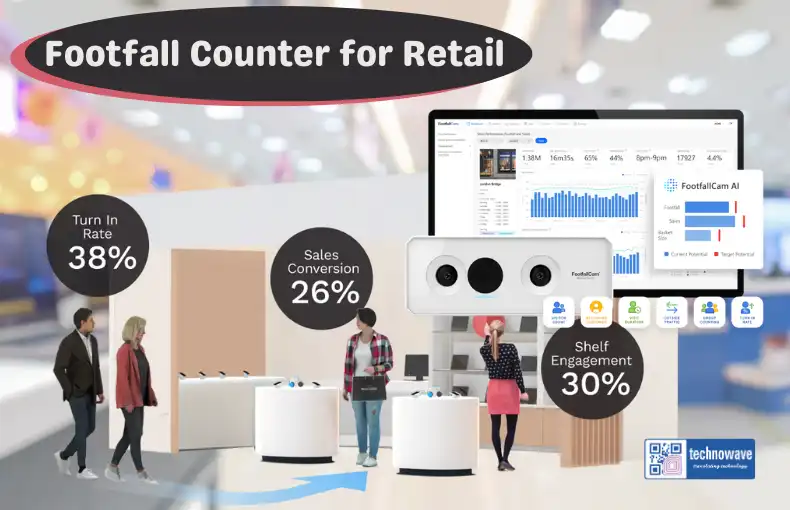
The modern retail environment is one where guessing what customers want or how they behave is not a consideration. With the retail industry being fiercely competitive and customers expectations constantly shifting, retailers require up-to-the-minute insights to keep up. The footfall counter is one of the most impactful tools to help implement this.
When integrated with retail analytics technology, footfall counter turn routine visitor counts into actionable insights that help brands boost sales, improve customer experiences and streamline store operations. In this blog, I consider how retailers can make footfall figures work for them.
What is a Footfall Counter?
A footfall counter is a machine or mechanism for counting people entering and leaving a retail space. Today’s counters vary from infrared sensors to sophisticated AI cameras able to detect demographics and trends in motion.
This raw data is processed into meaningful insight through retail analytics companies. By monitoring peak times to understand how customers navigate the store, these tools help retailers understand what consumers are doing and why they do it.
Catching the Breeze: How footfall analytics can help you to learn from your customers. Footfall counter offer more than just visitor figures. Spend patterns can show a peek on how shoppers are behaving when looked at with retail analytics companies:
Peak Times and Traffic: Retailers could use information on the store’s busiest times to optimize staff and resource allocation.
Dwell Time Analysis: Observing the amount of time customers dwell at a particular location can show interest in products, or visual displays.
Motion Patterns: Retailers can optimize how they arrange and situate high-value items based on shopper movement throughout the store.
Conversion Insights: Compare footfall to sales data to understand which visits convert into sales and those that don’t.
The implications of such insights let retailers transition from being reactive to making proactive decisions that benefit and engage customers and grow the bottom line.
Converting Footfall Data into Sales
A. Optimizing Store Layouts
Footfall counter show which displays are driving the most attention and which may be underperforming. Merchants can strategically position items, promotional displays or signage for maximum exposure and sales in high traffic areas.
B. Personalized Marketing and Promotions
Retailers can also model promotions and generate them to understand which customer behaviour they appeal to. For example, if footfall analytics indicate that there are more visits on the weekends than during the week, retailers can run special offers to push for conversions.
C. Improving Staffing Efficiency
For retailers, personnel is among the biggest costs of doing business. Traffic counters also allow store managers to time their staff according to traffic in the store, making sure there are enough people on during busy periods while at the same time avoid overstaffing when footfall is low.
D. Enhancing Customer Experience
For example, footfall data uncovers pain points where customers are experiencing long lines, crowded walkways or underperforming areas. There are solutions, from adding more check-out stations to rearranging items in stores” to make for an easier shopping trip and encourage return visits.
E. Aligning Inventory with Demand
Retailers can predict demand by measuring footfall and correlating it to product sales. This helps to keep trending products in stock and minimizes overstock of slow moving inventory, resulting in more sales and lower costs.
How to Combine Footfall Counters and retail analytics companies
retail analytics companies paired with a footfall counter is where the real magic happens. Together, they provide:
Live Tracking: Get minute to minute visitor tracking for on the fly operations at managers fingertips.
Behavioral Segmentation: An analytics tool can segment site visitors on things like demographics, dwell time or return visits; enabling more targeted marketing and merchandising.
Performance Monitoring: Retailers can monitor the success of a campaign, changes to product placement or store design with hard data instead of instincts.
Predictive Analysis: Based on historic footfall trends, you can predict the store traffic and demand to strategize more proactively.
Added together, these numbers lead to actionable tactics that can drastically affect sales, and service.
Read Also: Starting Your Business in Hong Kong
The Future of Retail with Shopper Counting Cameras
Footfall counter are getting smarter and, as technology progresses, retail analytics companies is also increasingly advanced. AI-based intelligence, coupled with IoT and predictive analytics lets retailers predict customer behavior today rather than simply reacting to it.
Some future trends include:
Super-Personalized Experiences: Pivoting in-store promotions on users’ habits and demographics. Seamless Integration of the Online and Offline Channel. The online/offline interface provides a smooth shopping experience.
Sustainability: lighting and HVAC optimized in all our stores, maximizing energy savings; CO2 impact reduced by 30%.
Active Decision Making: Modifying store layouts, staff numbers or marketing across all stores on the fly according to live footfall information.
Using these tools, retailers can position themselves to be nimble, customer-centric and competitive in a world that’s becoming more reliant on data.
Conclusion
Footfall counter are more than just visitor-counting tools – they offer a portal into customer insights and business decisions. Combined with retail analytics, footfall provides retailers the ability to optimize store layouts, staff effectively, improve customer experience and ultimately increase sales.
Customers’ expectations for high-quality in-store experiences are at an all-time-high, so converting foot traffic numbers into actionable strategies is not only beneficial–it’s necessary to retail success.
FAQs
Q1: What is a footfall counter.
The footfall counter records the number of customers entering a retail store through an entranceway and stepping across a sensing zone inside the store, and provides information on shop-traffic and customer behavior.
Q2: How are retailers able to benefit from footfall data?
Footfall data uncovers all the patterns to traffic flows, linger times and directional trends that retailers can use to adjust their layouts along with staffing, marketing and stock levels.
Q3: Is it profitable having footfall counters in small shops?
Yes. Tools such as footfall counter and retail analytics companies are now at the disposal of even smaller retailers to find ways of enhancing the retail experience and inform evidence-based decisions.
Q4: Is customer privacy at risk with footfall counters?
No. They do not. Modern counters take anonymous, non-identifiable data and abide by privacy regulations to ensure customer info is securely stored.
Q5: What is this about footfall counters and retail analytics companies?
Traffic counters capture visitor counts, which are processed and rendered into actionable retail analytics data by the associated software for operations, marketing and sales.